Asturias is home to a large share of the bears of the Cantabrian Mountains: the regional breakdown of the 2020 genetic census gives it about 131 bears, out of roughly 370 estimated in total. Almost all of them belong to the western subpopulation, the larger one; eastern Asturias — Caso and Ponga — is part of the eastern subpopulation.
For travellers, that means three clear destinations, each with its own character. Choosing well between them is the first decision, and the one that weighs most on your chances of seeing a bear.
Map of bear country in Asturias
Bear country in Asturias covers mainly the southwest and the south-centre of the region. According to the regional government, the western subpopulation ranges across municipalities such as Somiedo, Cangas del Narcea, Degaña, Ibias, Teverga, Proaza, Quirós, Santo Adriano, Lena, Belmonte de Miranda, Salas, Tineo, Allande, Grado and Yernes y Tameza; in the east, across Caso and Ponga.
There is no up-to-date official public map of bear presence, and that makes sense: good guides share areas, not the location of individual bears. For bear watching, it all comes down to three destinations.
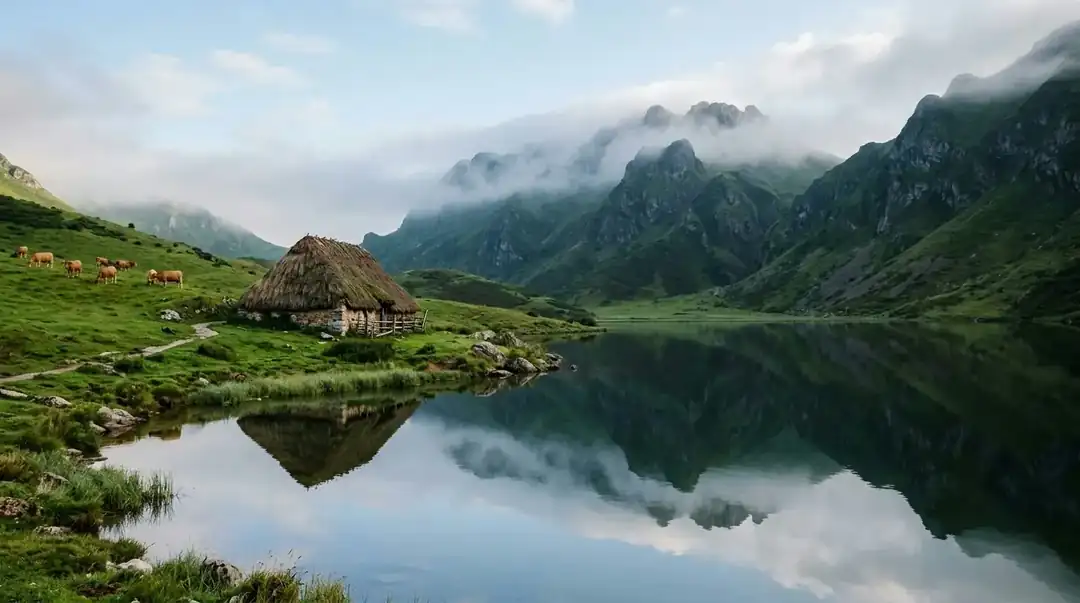
- Somiedo: the classic destination, with the longest bear-watching tradition and viewpoints along the road to the pass.
- Fuentes del Narcea: Cangas del Narcea, Degaña and Ibias, around Muniellos. Wilder and far less crowded.
- Bear Valley: Proaza, Teverga, Quirós and Santo Adriano, home to the Bear’s House. A great start, although the Proaza enclosure is not watching in the wild.
When to see bears in Asturias
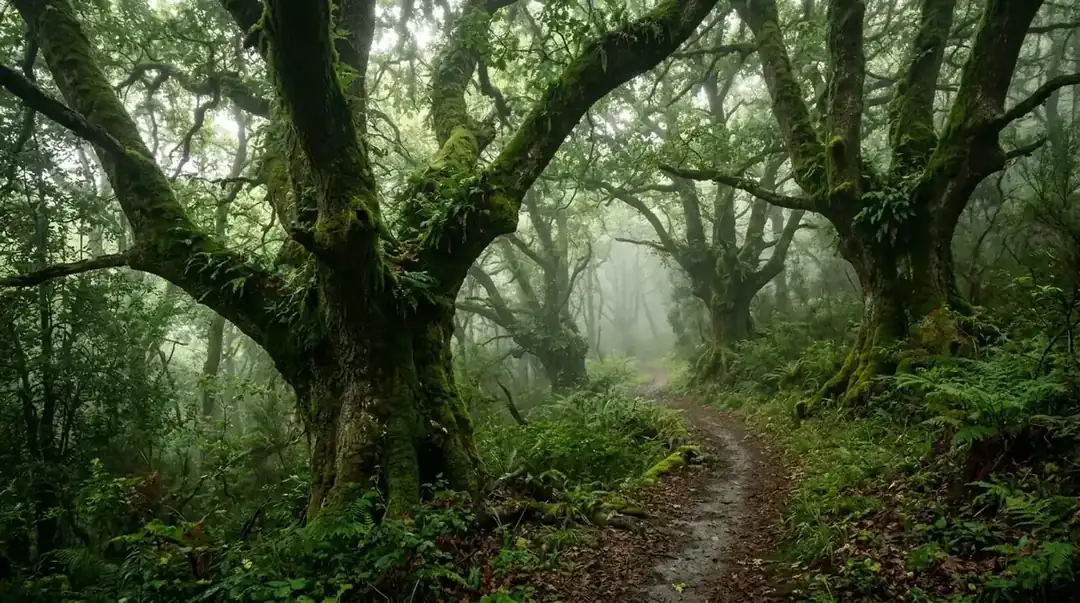
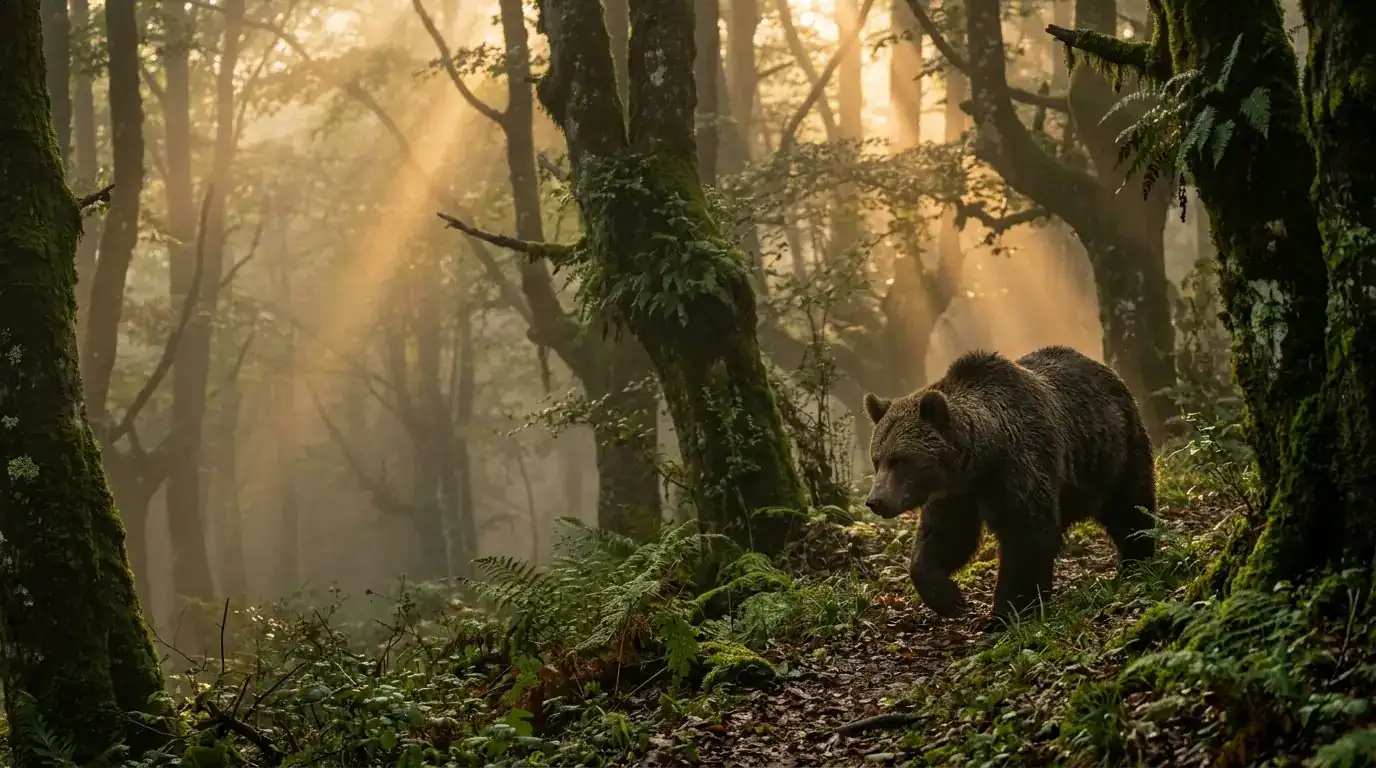
Spring, from April to June, is the season Turismo Asturias highlights most: bears come out of hibernation, look for fresh grass on open slopes, and it is the time of mating and of sows with cubs. Late summer and autumn are the second window: hazelnuts and bilberries first, then acorns and chestnuts, especially in Fuentes del Narcea.
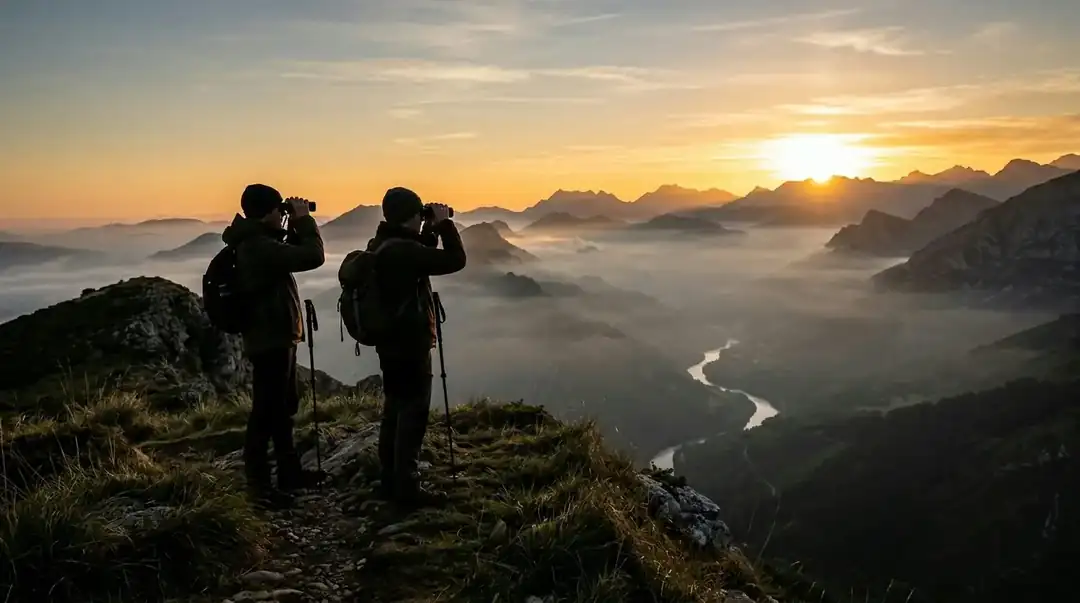
At any time of year, the good hours are the first of the morning and the last of the evening. At midday the bear rests in thick woodland.
How to see them: on your own or with a guide
You can do it on your own: a viewpoint, binoculars and patience. But an outing with a local guide multiplies your options, because the guide knows which slope is active that week. In Asturias published prices range from €30 to €75 per person, most commonly €40–50, for about four hours with a spotting scope.
What never to do: get close, use calls or food, or follow a bear for a photo. The Spanish Ministry’s 2017 good-practice handbook sums it up: watch from afar, in silence and without changing the animal’s behaviour.
Bear watching in Asturias over a weekend
- Friday: arrive in Pola de Somiedo (about 80 km from Oviedo) and stroll around the village.
- Saturday: dawn at a viewpoint on the road to the pass, a visit to the Bear’s House in Pola de Somiedo and, at dusk, back to the slopes.
- Sunday: one last dawn in Somiedo and, on the way back to Oviedo, a stop at the Bear’s House in Proaza.