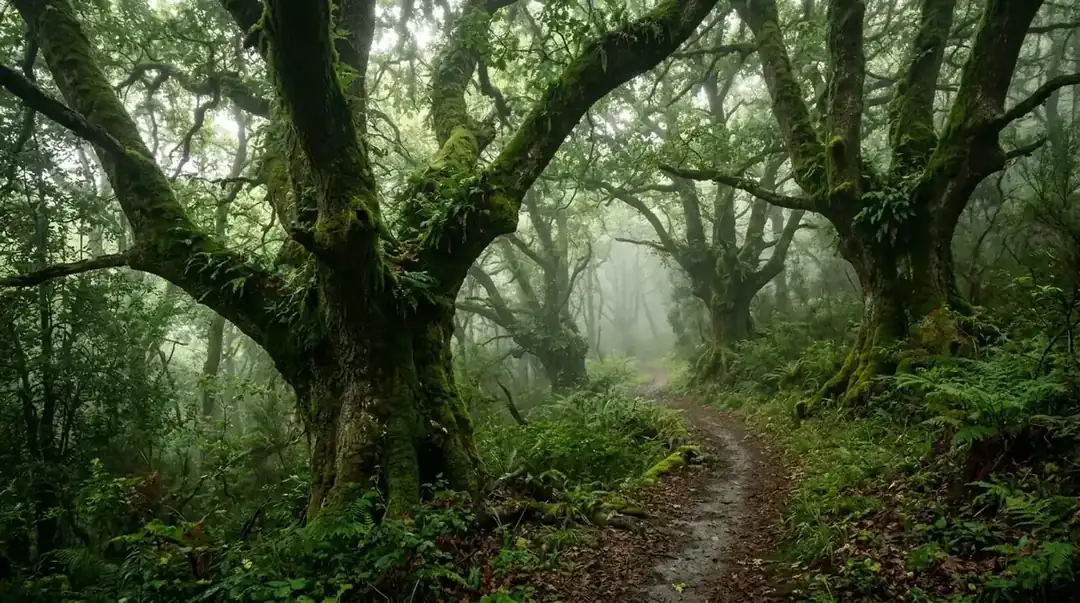
Muniellos is a storybook forest: centuries-old oaks draped in moss, almost permanent mist and a sense of time standing still that you will not find in any other forest on the peninsula. It is also prime bear country: the Fuentes del Narcea, Degaña and Ibias Biosphere Reserve holds one of the two great Cantabrian brown bear populations.
Access is deliberately kept very limited: entering Muniellos is a privilege you apply for in advance, and that is what makes the visit an unforgettable experience. And if you do not get a place, there are still ways to see the oak forest without a permit.
How to get the permit for Muniellos
Entry to the Integral Nature Reserve is free, but only 20 people a day are allowed in and you need a permit from the Principality of Asturias. You apply online, and bookings for each year open on 15 December of the year before: places are allocated on a first-come basis and spring and autumn dates go fast.
You first receive a pre-authorisation that must be confirmed between 23 and 15 days before your visit; if you do not confirm it, it is cancelled. Each person can hold one permit per year, and no-shows who do not cancel lose the option until the following year.
- Closing days: 1 and 6 January; 24, 25 and 31 December, and every Tuesday in January, February, March, November and December. It may also close because of bad weather or fire risk, in which case permits are cancelled.
- On the day: bring your permit (printed or as a PDF) and ID. Entry and exit are only through Tablizas, and no permits are issued on the spot.
- No dogs: they are not allowed inside the reserve.
The Muniellos trails: from the boardwalk to the lakes
All trails start and finish at the Tablizas Visitor Reception Centre. The easiest is the accessible boardwalk along the Candanosa stream, 1.2 km there and back. The river trail follows the valley and gets harder after km 4, with loose stone; from Las Tres Cruces, a 1.5 km branch of steady climbing leads to the glacial lakes.
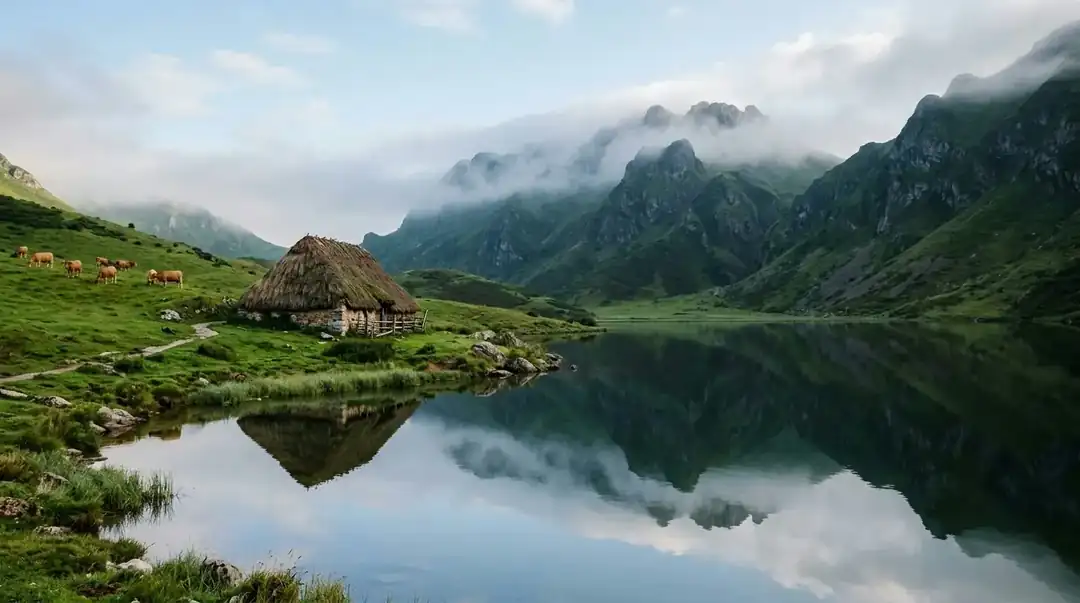
The big one is the circular route of about 20 km: it climbs the Degollada valley, crosses a beech wood to Fonculebrera and Las Tres Cruces, looks over the lakes — La Isla, La Fonda, the Grande and, in rainy periods, La Peña — and comes back down along the river trail. It has steep sections and roped passages: a full mountain day that calls for good fitness and hiking boots.
Is Muniellos a natural park?
Many people look for the "Muniellos natural park", but the exact designation is different: Muniellos is an Integral Nature Reserve, the highest level of protection in Asturias, and it is the heart of the Fuentes del Narcea, Degaña and Ibias Natural Park that surrounds it.
The difference matters when planning: the natural park can be explored freely by road, through its villages and on waymarked trails; the Muniellos oak forest itself can only be entered with a permit and within the daily quota.
Muniellos without a permit: centre, viewpoints and a short walk
If you have not got a place, you can still see the oak forest. In Oubachu (Oballo), on the AS-384 between Oballo and Moal, the Muniellos Interpretation Centre has free entry; around the building, the La Candanosa viewpoint gives the best views over the valley. The Pico Luis viewpoint, with its summit table, can only be visited on a guided walk booked at the centre.
On the surrounding road, towards the Connio pass, the Mirador de Muniellos has parking and an interpretation panel. And for a walk without a permit, the Moal trail (PR-AS 132) is an easy 10 km loop through a very similar forest.
The bear in Fuentes del Narcea
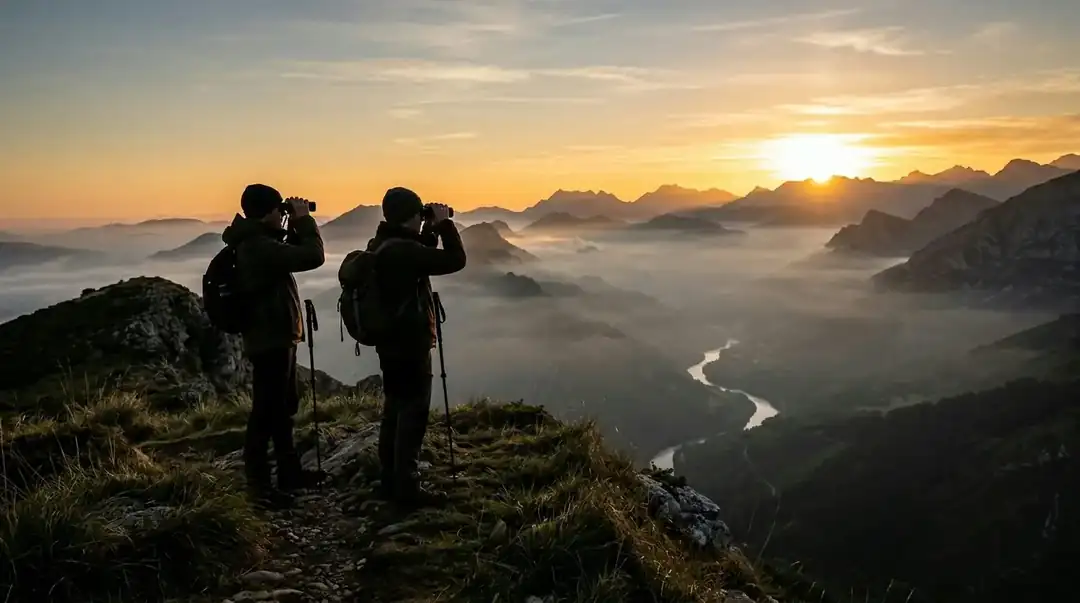
The Cangas del Narcea area, with its Degaña and Ibias ranges, is home to sows with cubs and to males that come down to the chestnut groves in autumn. Watching is done from viewpoints and country roads at dawn, almost always with a guide.
The town of Cangas del Narcea and its surroundings also offer a surprisingly rich monumental heritage — the Monastery of Corias is one of the great monasteries of Spain — that rounds off any escape.
Surroundings and accommodation
The area has rural cottages and small hotels in Cangas del Narcea, Ibias and Degaña. It is a quiet tourism destination, perfect for combining forest, gastronomy (the cocido stew and the wines of the Cangas DO) and wildlife watching.